Saturday, 22 July 2017

16-Bit Xorshift Pseudorandom Numbers in Z80 Assembly

Xorshift is a simple, fast pseudorandom number generator developed by George Marsaglia. The generator combines three xorshift operations where a number is exclusive-ored with a shifted copy of itself:

/* 16-bit xorshift PRNG */

unsigned xs = 1;

unsigned xorshift( )
{
    xs ^= xs << 7;
    xs ^= xs >> 9;
    xs ^= xs << 8;
    return xs;
}

There are 60 shift triplets with the maximum period 216-1. Four triplets pass a series of lightweight randomness tests including randomly plotting various n × n matrices using the high bits, low bits, reversed bits, etc. These are: 6, 7, 13; 7, 9, 8; 7, 9, 13; 9, 7, 13.

7, 9, 8 is the most efficient when implemented in Z80, generating a number in 86 cycles. For comparison the example in C takes approx ~1200 cycles when compiled with HiSoft C v1.3.

; 16-bit xorshift pseudorandom number generator
; 20 bytes, 86 cycles (excluding ret)

; returns   hl = pseudorandom number
; corrupts   a

xrnd:
  ld hl,1       ; seed must not be 0

  ld a,h
  rra
  ld a,l
  rra
  xor h
  ld h,a
  ld a,l
  rra
  ld a,h
  rra
  xor l
  ld l,a
  xor h
  ld h,a

  ld (xrnd+1),hl

  ret
z80 xorshift

Wednesday, 19 July 2017

A Fast Z80 Integer Square Root

A project I'm working on needs a fast square root but I couldn't find anything suitable online. After implementing several versions of the bit-by-bit algorithm I discovered the following code is particularly efficient when unrolled:

/* Return the square root of numb */

int isqrt( numb )
{
    int root = 0, bit = 04000h;
    while ( bit != 0 )
    {
        if ( numb >= root + bit )
        {
            numb = numb - root - bit;
            root = root / 2 + bit;
        }
        else
            root = root / 2;
        bit = bit / 4;
    }
    return root;
}

First Make It Work

The looping version is small but clunky. It spends almost 400 t-states shifting bits. We'll be able to eliminate most of the shifting by hard-coding the bit positions when the loop is unrolled:

; 16-bit integer square root
; 34 bytes, 1005-1101 cycles (average 1053)

; call with de = number to square root
; returns   hl = square root
; corrupts  bc, de

  ld bc,08000h
  ld h,c
  ld l,c
sqrloop:
  srl b
  rr c
  add hl,bc
  ex de,hl
  sbc hl,de
  jr c,sqrbit
  ex de,hl
  add hl,bc
  jr sqrfi
sqrbit:
  add hl,de
  ex de,hl
  or a
  sbc hl,bc
sqrfi:
  srl h
  rr l
  srl b
  rr c
  jr nc,sqrloop

Then Make It Work Faster

First the loop is unrolled. The first 4 iterations are optimized to work on 8-bit values and bit positions are hard-coded. The first and last iteration are optimized as a special case, we work with the bitwise complement of the root instead of the root and small jumps are replace with overlapping code. The final code finds the root in an average of 362 t-states:

; fast 16-bit integer square root
; 92 bytes, 344-379 cycles (average 362)
; v2 - 3 t-state optimization spotted by Russ McNulty

; call with hl = number to square root
; returns    a = square root
; corrupts  hl, de

  ld a,h
  ld de,0B0C0h
  add a,e
  jr c,sq7
  ld a,h
  ld d,0F0h
sq7:

; ----------

  add a,d
  jr nc,sq6
  res 5,d
  db 254
sq6:
  sub d
  sra d

; ----------

  set 2,d
  add a,d
  jr nc,sq5
  res 3,d
  db 254
sq5:
  sub d
  sra d

; ----------

  inc d
  add a,d
  jr nc,sq4
  res 1,d
  db 254
sq4:
  sub d
  sra d
  ld h,a

; ----------

  add hl,de
  jr nc,sq3
  ld e,040h
  db 210
sq3:
  sbc hl,de
  sra d
  ld a,e
  rra

; ----------

  or 010h
  ld e,a
  add hl,de
  jr nc,sq2
  and 0DFh
  db 218
sq2:
  sbc hl,de
  sra d
  rra

; ----------

  or 04h
  ld e,a
  add hl,de
  jr nc,sq1
  and 0F7h
  db 218
sq1:
  sbc hl,de
  sra d
  rra

; ----------

  inc a
  ld e,a
  add hl,de
  jr nc,sq0
  and 0FDh
sq0:
  sra d
  rra
  cpl

Saturday, 20 May 2017

ZX Spectrum BASIC Challenges

Recently I've entered a few of the programming challenges in the BASIC on the ZX Spectrum group on Facebook. They vary in difficultly but it's possible to write a program for most in under 30 minutes. If you're looking for a quick challenge or the opportunity to improve you BASIC, why not take a look.

Here are some examples of the challenges:

Japanese Pattern

Uwe Geiken asked us to recreate an intricate Japanese pattern. By mirroring, rotating and repeating a 4 line candy cane shape I squeezed this into 156 bytes.


Earth/Venus Orbits

David Saphier challenged us to write the fastest code to display the Earth and Venus orbit pattern in BASIC. Being a bit of a rebel I aimed to write the shortest code and managed to completely botch it before coming up with this working version:


Greenlandic Flag

Matthew Logue issued a challenge to accurately display the flag of Greenland. The flag is simple enough to be reduced to a formula x²+y² < 54² ⊻ y > 0:


Triangles

Uke Geiken showed a pattern of triangles and asked for the shortest code. The shortest implementation I found uses UDGs:


Grid

Matthew Logue asked us recreate a grid-like pattern with the shortest code. Surprisingly I actually managed to discover the smallest program:


Weaving

‎Uwe Geiken challenged us to recreate a pattern of weaving attributes. I found this one pretty tricky to reduce in size, but finally got it down to 109 bytes:


Flag

Matthew Logue asked for the shortest code to recreate a 31×21 attribute flag-like pattern. Uwe Geiken solved this is 67 bytes, easily beating my 74:


Rudimentary Gear

Matthew Logue challenged us again, this time to draw a rudimentary gear with 10 teeth and a circular radius. Here's what I came up with:


Saturday, 29 April 2017

ZX Spectrum Scanline Flood Fill

A flood fill is a graphical algorithm to colour an area of screen bounded by pixels of another colour. The scanline technique is a fast, stack-efficient flood fill which can be implemented in 99 bytes of Z80, as demonstrated below:
; scanline fill by John Metcalf
; call with d=x-coord, e=y-coord

; set end marker

fill:
  ld l,255
  push hl

; calculate bit position of pixel

nextrun:
  ld a,d
  and 7
  inc a
  ld b,a
  ld a,1
bitpos:
  rrca
  djnz bitpos
  ld c,b
  ld b,a

; move left until hitting a set pixel or the screen edge

seekleft:
  ld a,d
  or a
  jr z,goright
  dec d
  rlc b
  call scrpos
  jr nz,seekleft

; move right until hitting a set pixel or the screen edge,
; setting pixels as we go. Check rows above and below and
; save their coordinates to fill later if necessary

seekright:  
  rrc b
  inc d
  jr z,rightedge
goright:
  call scrpos
  jr z,rightedge
  ld (hl),a
  inc e
  call checkadj
  dec e
  dec e
  call checkadj
  inc e
  jr seekright

; check to see if there's another row waiting to be filled

rightedge:
  pop de
  ld a,e
  inc a
  jr nz,nextrun
  ret  

; calculate the pixel address and whether or not it's set

scrpos:
  ld a,e
  and 248
  rra
  scf
  rra
  rra
  ld l,a
  xor e
  and 248
  xor e
  ld h,a
  ld a,l
  xor d
  and 7
  xor d
  rrca
  rrca
  rrca
  ld l,a
  ld a,b
  or (hl)
  cp (hl)
  ret

; check and save the coordinates of an adjacent row

checkadj:
  sla c
  ld a,e
  cp 192
  ret nc
  call scrpos+1
  ret z
  inc c
  bit 2,c
  ret nz
  pop hl
  push de
  jp (hl)

Sunday, 29 May 2016

Divide and Conquer Line Algorithm for the ZX Spectrum

While attempting to write a game in 256 bytes I needed a routine to draw lines, but Bresenham's line algorithm weighs in at approx ~120 bytes. The only suitable alternative I'm aware of is recursive divide and conquer: divide a line into two smaller lines and call the draw routine with each in turn:

/* Draw a line from (ax,ay) to (bx,by) */

int draw ( ax, ay, bx, by )
{
    int midx, midy;
    midx = ( ax+bx ) / 2;
    midy = ( ay+by ) / 2;
    if ( midx != ax && midy != ay )
    {
        draw( midx, midy, ax, ay );
        draw( bx, by, midx, midy );
        plot( midx, midy );
    }
}

This is significantly smaller thank Bresenham's, 32 byte of Z80. However, there are a couple of compromises: it's slower and the lines aren't perfect because the rounding errors accumulate.

; draw lines using recursive divide and conquer
; from de = end1 (d = x-axis, e = y-axis)
; to   hl = end2 (h = x-axis, l = y-axis)

DRAW:
  call PLOT

  push hl

; calculate hl = centre pixel

  ld a,l
  add a,e
  rra
  ld l,a
  ld a,h
  add a,d
  rra
  ld h,a

; if de (end1) = hl (centre) then we're done

  or a
  sbc hl,de
  jr z,EXIT
  add hl,de

  ex de,hl
  call DRAW    ; de = centre, hl = end1
  ex (sp),hl
  ex de,hl
  call DRAW    ; de = end2, hl = centre

  ex de,hl
  pop de
  ret

EXIT:
  pop hl
  ret

; ---------------------------

; plot d = x-axis, e = y-axis

PLOT:
  push hl
  ld a,d
  and 7
  ld b,a
  inc b
  ld a,e
  rra
  scf
  rra
  or a
  rra
  ld l,a
  xor e
  and 248
  xor e
  ld h,a
  ld a,l
  xor d
  and 7
  xor d
  rrca
  rrca
  rrca
  ld l,a
  ld a,1
PLOTBIT:
  rrca
  djnz PLOTBIT
  or (hl)
  ld (hl),a
  pop hl
  ret

Alternatively the de(end1) = hl(centre) test can be replaced with a recursion depth count to create an even slower 28 byte routine:

; draw lines using recursive divide and conquer
; from de = end1 (d = x-axis, e = y-axis)
; to   hl = end2 (h = x-axis, l = y-axis)

DRAW:
  ld c,8

DRAW2:
  dec c
  jr z,EXIT

  push de

; calculate de = centre pixel

  ld a,l
  add a,e
  rra
  ld e,a
  ld a,h
  add a,d
  rra
  ld d,a

  call DRAW2   ; de = centre, hl = end1
  ex (sp),hl
  call DRAW2   ; de = centre, hl = end2

  call PLOT
  ex de,hl
  pop hl
EXIT:
  inc c
  ret

Friday, 27 May 2016

Langton's Ant for the ZX Spectrum

Langton's Ant is an automata which creates a complex pattern by following a couple of simple rules:

  • If the ant is on an empty pixel, turn 90° right, set the pixel then move forward
  • If the ant is on a set pixel, turn 90° left, reset the pixel then move forward

The ant's path appears chaotic at first before falling into a repetitive “highway” pattern, moving 2 pixels diagonally every 104 cycles.

Here's the code to display Langton's Ant on the ZX Spectrum in 61 bytes. It runs in just over a second so you might want to add a halt to slow things down:

  org 65472

  ld de,128*256+96 

ANT:
; halt
  ld a,c      ; check direction
  and 3
  rrca
  add a,a
  dec a
  jr nc,XMOVE

  add a,e     ; adjust y position +/-1
  ld e,a
  cp 192
  ret nc  
  xor a

XMOVE:
  add a,d     ; adjust x position +/-1
  ld d,a

; ----------
  and 7       ; calculate screen address
  ld b,a
  inc b
  ld a,e
  rra
  scf
  rra
  or a
  rra
  ld l,a
  xor e
  and 248
  xor e
  ld h,a
  ld a,d
  xor l
  and 7
  xor d
  rrca
  rrca
  rrca
  ld l,a
  ld a,1
PLOTBIT:
  rrca
  djnz PLOTBIT
; ----------

  ld b,a      ; test pixel
  and (hl)

  jr nz,LEFT  ; turn left/right
  inc c
  inc c
LEFT:
  dec c

  ld a,b      ; flip pixel
  xor (hl)
  ld (hl),a
  jr ANT

Saturday, 3 October 2015

The Matrix Digital Rain for the ZX Spectrum

A few days ago I coded The Matrix digital rain effect, a fictional representation of the code for the virtual reality of The Matrix. The technique is simple: fill the screen with random characters and scroll down columns of attributes, occasionally switching between black and green.

Here's the final code - 147 bytes of Z80 using the default Sinclair font:

        org 08000h

; black border / black attributes

        xor a
        out (0FEh),a
        ld hl,05AFFh
attr:   ld (hl),a
        dec hl
        bit 2,h
        jr z,attr

; fill screen with random characters

        ld e,a
fillscr:ld d,040h
fill:   call rndchar
        ld a,d
        cp 058h
        jr nz,fill
        inc e
        jr nz,fillscr

; digital rain loop

frame:  ld b,06h
        halt
column: push bc

; randomize one character

        call random
        and 018h
        jr z,docol
        add a,038h
        ld d,a
        call random
        ld e,a
        call rndchar

; select a random column

docol:  call random
        and 01Fh
        ld l,a
        ld h,058h

; ~1% chance black -> white

        ld a,(hl)
        or a
        ld bc,0247h
        jr z,check

; white -> bright green

white:  cp c
        ld c,044h
        jr z,movecol

; bright green -> green

        cp c
        ld c,04h
        jr z,movecol

; ~6% chance green -> black

        ld bc,0F00h
check:  call random
        cp b
        jr c,movecol
        ld c,(hl)

; move column down

movecol:ld de,020h
        ld b,018h
down:   ld a,(hl)
        ld (hl),c
        ld c,a
        add hl,de
        djnz down
        pop bc
        djnz column

; test for keypress

        ld bc,07FFEh
        in a,(c)
        rrca
        jr c,frame
        ret

; display a random glyph

rndchar:call random
crange: sub 05Fh
        jr nc,crange
        add a,a
        ld l,a
        ld h,0
        add hl,hl
        add hl,hl
        ld bc,(05C36h)
        add hl,bc
        ld b,8
char:   ld a,(hl)
        ld (de),a
        inc d
        inc hl
        djnz char
        ret

; get a byte from the ROM

random: push hl
        ld hl,(seed)
        inc hl
        ld a,h
        and 01Fh
        ld h,a
        ld (seed),hl
        ld a,(hl)
        pop hl
        ret

seed:

Sunday, 26 July 2015

Z80 Size Programming Challenge #5

Recently I issued the fifth Z80 challenge for the Sinclair Spectrum:

This time the challenge is to write a solid flood fill routine to fill a region of unset pixels, bounded in 4 directions (up, down, left, right) by set pixels or the screen edge. The routine should be called with the X and Y coordinates in a register. There's no need to set the screen attributes.

Scoring is multi-objective: a routine will be judged by the code size and stack space required to fill a test image. Your routine will be awarded one point for each competing routine it is smaller *and* uses less stack space than. The routine(s) with the most points will be declared winner(s).

The deadline is Wednesday 22nd July, midday (GMT).

  1. The X and Y coordinates are in pixels with 0,0 at the top left.
  2. No memory other than the screen, stack and your routine can be written.
  3. If you call a ROM routine it's size will be added to your code size.
  4. Programs must return. The RET instruction is included in the size.
  5. So everyone has a fair chance comment with the code size not code.
  6. There are no prizes, just the chance to show off your coding skills.

The test image is designed to check correct behaviour at the screen boundary and to be pathological — triggering suboptimal behaviour in some common flood fill algorithms:

Final Results

Congratulations to everyone who coded a working flood fill and to Dworkin Z Amberu who claimed first place by being shorter and using less memory than competing entries.

Entries have been plotted on this genuine fake Spectrum screenshot. If the graph is empty below and to the left of an entry, that entry is in first place:


ColourCoderCodeMemoryTime
RedJohn Metcalf98~2K2.1 seconds
OrangePaul Rhodes102~1.8K3.2 seconds
YellowRalph Becket109~2K8.8 seconds
GreenMiguel Jódar166~800 bytes4.8 seconds
WhiteDworkin Z Amberu58~9.8K28.6 seconds
CyanJohn Metcalf54~6.1K28.6 seconds
BlackDworkin Z Amberu84~270 bytes40 seconds
BlueDworkin Z Amberu1928 bytes~40 minutes
PurpleAdrian Brown19912 bytes~3 hours?

Shortest Entry

The simplest entry is a recursive routine weighing in at 54 bytes. Despite being too heavy on the stack to score well it's one of the easiest to understand. Each time the routine is called it checks whether or not the pixel at X,Y is set. If not the pixel will be set then the fill routine is called recursively with the pixels up, down, left and right of the current pixel:

; called with e = X horizontal, d = Y vertical
FILL:
  ld b,e
  ld a,d
  and 248
  rra
  cp 96
  ret nc
  rra
  rra
  ld l,a
  xor d
  and 248
  xor d
  ld h,a
  ld a,e
  xor l
  and 7
  xor e
  rrca
  rrca
  rrca
  ld l,a
  ld a,128
PLOTBIT:
  rrca
  djnz PLOTBIT
  or (hl)
  cp (hl)
  ret z
  ld (hl),a
  inc e
  call nz,FILL
  dec e
  dec de
  call ZFILL
  inc de
  call FILL
  inc d
  inc d
ZFILL:
  call nz,FILL
  dec d
  ret

The winning entries will be available shortly.

Monday, 6 April 2015

Z80 Size Programming Challenge #4

The fourth Z80 challenge for the ZX Spectrum was issued last week:

Back to something simple for the next challenge, a diagonal fade-to-white CLS. Write the shortest code to wipe the screen by increasing the ink colour of each character until it reaches white.

The clear should start at the top left and move one character across the screen per frame. The initial screen can be assumed to be monochrome — black text, white background, flash off, bright off. There's no need to clear the screen bitmap. Here's a demonstration of the clear in slow motion:

Target: under 50 bytes.

The deadline is Monday 6th April, midday (GMT).

  1. Your program shouldn't rely on the initial contents of registers.
  2. Programs must halt between frames. The HALT is included in the size.
  3. No RAM/ROM other than the attribute memory should be written to.
  4. Programs must return. The RET instruction is included in the size.
  5. So everyone has a fair chance comment with the code size not code.
  6. There are no prizes, just the chance to show off your coding skills.

Final Results

Congratulations to everyone who entered and Arcadiy Gobuzov who claimed first place with a solution in 26 bytes. Most of the solutions use LDDR to move the attribute data with anonymous and Ralph Becket being the two exceptions. Here are the final results:

CoderSize
Arcadiy Gobuzov26
ub880d27
Bohumil Novacek27
anonymous27
Adrian Brown27
John Metcalf27
Ralph Becket30
Jim Bagley31
Paul Rhodes31

Winning Entry

Here's Arcadiy's winning entry in 26 bytes:

        xor a ; if comment then 25, but exit if a==56 on start
loop:        
        ld hl,#5ADF   ;
        cp (hl)       ;
        ld bc,#02E0   ; 23 lines of attributes
        ld de,#5AFF   ; 
        lddr          ; move down attributes
        ld c,e        ; e = #1F
        add hl,bc     ;
        lddr          ; roll upper line of attributes to right
        halt
        ret z
        ld a,(de)     ; de = first address of attibutes
        cp #3F        ;
        adc a,c       ; add 0 or 1 (carry)
        ld (de),a     ; now a in range [38..3f]
        jr loop

Here's my own solution in 27 bytes. Unfortunately I missed the final CP (HL) to squeeze out the last byte:

fadetowhite:
        ld de,23295 ; 90 255
        ld a,(de)
        cp 63
        ret z
        ld hl,23263 ; 90 223
        ld bc,736   ;  2 224
        halt
        lddr
        ld c,e
        add hl,bc
        lddr
        ld a,(de)
        cp 63
        adc a,c
        ld (de),a
        jr fadetowhite

Here's an alternative — a fade-to-black wipe (from white ink, black paper, no bright, no flash) in 25 bytes:

fadetoblack:
        ld de,23295 ; 90 255
        ld a,(de)
        or a
        ret z
        ld hl,23263 ; 90 223
        ld bc,736   ;  2 224
        halt
        lddr
        ld c,e
        add hl,bc
        lddr
        ld a,(de)
        add a,l
        sbc a,l
        ld (de),a
        jr fadetoblack

Monday, 30 March 2015

Z80 Size Programming Challenge #3

Recently I issued the third Z80 programming challenge for the ZX Spectrum:

This time the challenge is to write the shortest code to display a masked 16×16 pixel sprite. The routine should be called with the address of the sprite data in one register and the X and Y screen coordinates in another. There's no need to save the screen area being overwritten or set the colours / attributes. This is somewhat trickier than previous challenges but more likely to be of practical use.

The deadline is Monday 30th March, midday (GMT).

Target: under 125 bytes.

  1. The X and Y coordinates are in pixels with 0,0 at the top left.
  2. The sprite needs to be clipped if it goes over the screen edge.
  3. Sprite data can be formatted however you like within 64 bytes.
  4. Programs must return. The RET instruction is included in the size.
  5. So everyone has a fair chance comment with the code size not code.
  6. There are no prizes, just the chance to show off your coding skills.

Solutions can be emailed to digital.wilderness@googlemail.com or posted here after the deadline.


Final Results

Congratulations to everyone who rose to the challenge, this was a tough one. Adrian claimed an impressive victory with a neat piece of self-modifying code. Here are the final results:

CoderSize
Adrian Brown68
John Metcalf88
Ralph Becket97
Arcadiy Gobuzov99

Winning Entry

Adrian Brown submitted an ingenious solution in only 68 byte. The code displays a sprite pixel by pixel in approx 18ms. The instruction at DS_SetResOp is modified to set, reset or leave the appropriate bit.

DrawSprite:
    ; At most we want to draw 16 lines (lets store
    ; the 4 onto c as well as its saves a byte)
    ld bc, 01004h
DS_YLoop:
    ; Gotta be able to stop doing all this push/pop
    ; with exx at some point - but hey ho
    push bc
    push de

    ; Splitting is actually helpful as it gives us
    ; the byte increase on clipping :D
DS_XLoop1:
    ; Lets get that data byte
    ld b, 4
DS_XLoop2:
    ; Bit cheaty, roll the actual data, it will end
    ; up back as it started so thats fine
    ld a, (hl)
    rlca
    rlca
    ld (hl), a

    ; Store the data pointer
    push hl

    ; See if we want to draw or not, bit sneaky
    ; because of data layout
    or %10011111
    ld l,a

    ; Now calculate the screen address, start it
    ; here so carry is clear
    ld a,e
    rra
    ; Lets use the check to set the C flag
    cp 96
    jr nc, DS_SkipPixel
    rra
    or a
    rra
    push af
    xor e
    and %11111000
    xor e
    ld h,a

    ; Now work out the opcode for set/res bit (we need
    ; 01 for bit, 10 for res and 11 for set - so data
    ; needs to be 10 for bit, 01 for res and 00 for set)
    ld a,d
    and %00000111
    rlca
    rlca
    ; Thats nice, this will do the cpl for us on the
    ; bit number ;)
    xor l
    rla
    ld (DS_SetResOp + 1),a

    pop af
    xor d
    and %00000111
    xor d

    ; Move across - check for clipping, do it here so
    ; we can use a as a value > 192
    inc d
    jr nz, DS_NoClipX

    ; Stick Y off the bottom so the rest of the line is clipped
    ; we can use a at this point as its got to be > 192
    ld e, a
DS_NoClipX:

    rrca
    rrca
    rrca
    ld l,a

    ; Go set/res the bit
DS_SetResOp:
    set 0, (hl)
DS_SkipPixel:
    ; Store the data pointer 
    pop hl

    ; Go do the byte of data
    djnz DS_XLoop2

    ; Now we need to move to the next bytes
    inc hl
    dec c
    jr nz, DS_XLoop1

    pop de
    pop bc

    ; Just increase down
    inc e
    djnz DS_YLoop
    ret

;***********************************************************
; Sprite Data twiddled a bit, Mask/Data/Mask/Data
; Mask = 0 we want the screen, set data to 1 means we convert
; the set/res into a bit which is fine, All rolled right
; three bit to get the pixel data i want in bits 3+4
;***********************************************************

SpriteData:
    db %10101010, %01001011, %10110100, %10101010
    db %10101010, %11110101, %01011111, %10101010
    db %11001010, %01011111, %11110101, %10110010
    db %01101011, %01010101, %01010101, %10111100
    db %11001101, %11010101, %01010101, %00110111
    db %11001101, %11110111, %01010101, %00110111
    db %01010111, %11010101, %01110101, %11010101
    db %01010111, %01010101, %01010101, %11011101
    db %01010111, %01010101, %01110101, %11010101
    db %01010111, %01010101, %11010101, %11011101
    db %11001101, %01010101, %01110111, %00110111
    db %11001101, %11010101, %11011101, %00110111
    db %01101011, %01110101, %01010111, %10111100
    db %11001010, %01011111, %11110101, %10110010
    db %10101010, %11110101, %01011111, %10101010
    db %10101010, %01001011, %10110100, %10101010

Here my own solution in 88 bytes. This displays the sprite row by row and is slightly faster, taking approx 5ms.

; called with hl = address of sprite, de = position on screen

putsprite:
  ld c,16
nextline:
  ld a,d
  and 7
  inc a
  ld b,a
  ld a,e
  rra
  cp 96
  ret nc
  rra
  or a
  rra
  push de
  push hl
  ld l,a
  xor e
  and 248
  xor e
  ld h,a
  ld a,l
  xor d
  and 7
  xor d
  rrca
  rrca
  rrca
  ld l,a

  ld e,255
spd:
  ex (sp),hl
  ld a,(hl)
  inc hl
  ld d,(hl)
  inc hl
  ex (sp),hl

  push bc
  rrc e
  jr noshift
shiftspr:
  rra
  rr d
  rr e
noshift:
  djnz shiftspr

  push hl
  ld b,3
mask:
  bit 0,e
  jr z,bm1
  and (hl)
db 254 ;  jr bm2
bm1:
  xor (hl)
bm2:
  ld (hl),a
  inc l
  ld a,l
  and 31
  ld a,d
  ld d,e
  jr z,clip
  djnz mask
clip:
  bit 0,e
  ld e,0
  pop hl
  pop bc
  jr nz,spd
  pop hl
  pop de
  inc e
  dec c
  jr nz,nextline
  ret

sprite:
  db %11111100, %00111111, %00000000, %00000000
  db %11110000, %00001111, %00000011, %11000000
  db %11100000, %00000111, %00001100, %00110000
  db %11000000, %00000011, %00010000, %00001000

  db %10000000, %00000001, %00100010, %00000100
  db %10000000, %00000001, %00100111, %00000100
  db %00000000, %00000000, %01000010, %00010010
  db %00000000, %00000000, %01000000, %00001010

  db %00000000, %00000000, %01000000, %00010010
  db %00000000, %00000000, %01000000, %00101010
  db %10000000, %00000001, %00100000, %01010100
  db %10000000, %00000001, %00100010, %10100100

  db %11000000, %00000011, %00010001, %01001000
  db %11100000, %00000111, %00001100, %00110000
  db %11110000, %00001111, %00000011, %11000000
  db %11111100, %00111111, %00000000, %00000000

Monday, 15 December 2014

Z80 Size Programming Challenge #2

Last week I issued the second Z80 programming challenge:

Something slightly more complex this time. Write the shortest code to mirror the entire Sinclair Spectrum screen (256×192 pixels) left to right including the colours / attributes. The deadline is Monday 15th, midday (GMT).

Target: under 50 bytes.

  1. Your program shouldn't rely on the initial contents of registers.
  2. No RAM/ROM other than the screen memory should be written to.
  3. Programs must return. The RET instruction is included in the size.
  4. So everyone has a fair chance comment with the code size not code.
  5. There are no prizes, just the chance to show off your coding skills.

Final Results

We stepped up the difficultly for the second challenge so congratulations to everyone who entered. Introspec ZX and Tim Webber discovered the shortest solutions. Here are the final results:

CoderSize
Introspec Zx34
Tim Webber34
John Metcalf34
Paul Rhodes35
Simon Brattel35
Jim Bagley36
Steve Wetherill38
John Young49
Chris Walsh49
Dariusz EM50

Winning Entries

Introspec submitted the first 34 byte solution using a couple of neat tricks. Note the use of CP L to check which side of the screen it's working on and the byte saved by setting B to #58:

                ld hl,16384+6912

screenflip:     ld d,h
                ld a,l
                xor #1F
                ld e,a
                cp l
                jr nc,noflip

                ld a,(de)
                ld c,(hl)
                ld (hl),a
                ld a,c
                ld (de),a

noflip:         ld b,#58
                ld a,h
                cp b
                jr nc,skipattr

byteflip:       rlc (hl)
                rra
                djnz byteflip
                ld (hl),a

skipattr:       dec hl
                bit 6,h
                jr nz,screenflip
                ret

Tim Webber's solution saves a series of addresses on the stack to be used later:

start:          ld hl,23296
loop1:          dec hl
                bit 6, h
                ret z
                ld a, 87
                cp h
                jr c, noinv
                ld b,8
doinv:          rl (hl)
                rra
                djnz doinv
                ld (hl), a
noinv:          push hl
                bit 4,l
                jr nz, loop1
                pop de
                pop hl
                ld a,(de)
                ld c, (hl)
                ld (hl), a
                ex de, hl
                ld (hl), c
                jr loop1

Although I didn't enter I also found a couple of 34 byte solutions. The first mirrors two bytes in the inner loop:

                ld hl,16384
mirror:         ld d,h
                ld a,l
                xor 31
                ld e,a
                ld a,h
                cp 91
                ret z
                cp 88
                ld a,(de)
                ld c,a
                jr nc,attrib
                ld b,8
                rrca
mirrorbits:     rl (hl)
                rra
                djnz mirrorbits
                db 1 ; skip the next two instructions
attrib:         ld a,(hl)
                ld (hl),c
                ld (de),a
                inc l
                inc hl
                jr mirror

My second has two separate loops. The first loop mirrors bytes, the second mirrors the screen:

                ld hl,22527
mir:            ld a,128
mirrorbits:     rl (hl)
                rra
                jr nc,mirrorbits
                ld (hl),a
                dec hl
                bit 6,h
                jr nz,mir
mirror:         inc hl
                ld d,h
                ld a,l
                xor 31
                ld e,a
                ld a,h
                cp 91
                ret z
                ld a,(de)
                ld c,a
                ld a,(hl)
                ld (hl),c
                ld (de),a
                inc l
                jr mirror

Is 34 Bytes Optimal?

Definitely not! After the deadline a solution was discovered that combines code from Tim Webber and Introspec's entries to mirror the screen in 33 bytes:

start:          ld hl,23296 ; Tim Webber/Introspec
loop1:          dec hl
                bit 6, h
                ret z
                ld a, h
                ld b,88
                cp b
                jr nc, noinv
doinv:          rlc (hl)
                rra
                djnz doinv
                ld (hl), a
noinv:          push hl
                bit 4,l
                jr nz, loop1
                pop de
                pop hl
                ld a,(de)
                ld c, (hl)
                ld (hl), a
                ex de, hl
                ld (hl), c
                jr loop1

Another 33 byte solution combines the code from Tim Webber and Simon Brattel's entries:

start:          ld hl,23296 ; Tim Webber/Simon Brattel
loop1:          dec hl
                ld a,h
                cp 88
                jr nc, noinv
                and 64
                ret z
                add a,a
doinv:          rlc (hl)
                rra
                jr nc,doinv
                ld (hl), a
noinv:          push hl
                bit 4,l
                jr nz, loop1
                pop de
                pop hl
                ld a,(de)
                ld c, (hl)
                ld (hl), a
                ex de, hl
                ld (hl), c
                jr loop1

Entries will be available shortly on John Young's website. Thanks to everyone who entered for making the contest a success :-)

Monday, 8 December 2014

Z80 Size Programming Challenge #1

A few days ago I issued a Z80 programming challenge for the ZX Spectrum:

Something simple for the first challenge. Write the shortest code to fill the screen with a chequerboard pattern of 1 pixel squares. No RAM/ROM other than the 6144 byte bitmap screen memory should be written to.

Target: under 25 bytes.

  1. Your program shouldn't rely on the initial contents of registers.
  2. Programs must return. The RET instruction is included in the size.
  3. So everyone has a fair chance comment with the code size not code.
  4. There are no prizes, just the chance to show off your coding skill.

Final Results

Congratulations to all who entered, especially Allan Høiberg and Introspec Zx who both discovered a 15-byte solution. The final results are as follows:

CoderSize
Allan Høiberg15
Introspec Zx15
Jim Bagley16
Paul Rhodes16
Krystian Włosek16
Tim Webber16
Steve Wetherill16
John Young16
Simon Brattel16
John Metcalf16
Dariusz EM17
Chris Walsh23

Winning Entries

Allan was the first to discover a 15-byte solution:

                LD BC,22272
                LD A,85
LoopB:          BIT 6,B
                RET Z
LoopC:          DEC C
                LD (BC),A
                JR NZ,LoopC
                CPL
                DJNZ loopB

Introspec found a 15-byte solution with only one loop:

                ld hl,16384+6143
filloop5:       ld a,h
                rra
                sbc a,a
                xor %01010101
                ld (hl),a
                dec hl
                bit 6,h
                jr nz,filloop5
                ret

My own attempts all fell short at 16 bytes:

                ld hl,22528-256
                ld bc,24*256+170
fill:           dec l
                ld (hl),c
                jr nz,fill
                rrc c
                dec h
                djnz fill
                ret

Entries are archived on John Young's website. Thanks to everyone who entered or otherwise supported the challenge. :-)

Saturday, 15 March 2014

Plotting the Mandelbrot Set on the ZX Spectrum

ZX Spectrum MandelbrotZX Spectrum Mandelbrot

The Mandelbrot set is a fractal which iterates the equation zn+1 = zn² + c in the complex plane and plots which points tend to infinity. Plotting the set with Sinclair BASIC takes over 24 hours so I was curious how much faster it would be in assembly.

It turns out if we use fast 16-bit fixed-point arithmetic we can plot the Mandelbrot in about 5 minutes. To minimise multiplications each iteration is calculated as:

rn+1 = ( rn + in ) × ( rn - in ) + x

in+1 = 2 × in × rn + y

The following test is used to detect points which tend to infinity:

|in| + |rn| ≥ 2 × √ 2.
  org 60000
  ld de,255*256+191
XLOOP:
  push de
  ld hl,-180   ; x-coordinate
  ld e,d
  call SCALE
  ld (XPOS),bc
  pop de
YLOOP:
  push de
  ld hl,-96    ; y-coordinate
  call SCALE
  ld (YPOS),bc
  ld hl,0
  ld (IMAG),hl
  ld (REAL),hl
  ld b,15      ; iterations
ITER:
  push bc
  ld bc,(IMAG)
  ld hl,(REAL)
  or a
  sbc hl,bc
  ld d,h
  ld e,l
  add hl,bc
  add hl,bc
  call FIXMUL
  ld de,(XPOS)
  add hl,de
  ld de,(REAL)
  ld (REAL),hl
  ld hl,(IMAG)
  call FIXMUL
  rla
  adc hl,hl
  ld de,(YPOS)
  add hl,de
  ld (IMAG),hl
  call ABSVAL
  ex de,hl
  ld hl,(REAL)
  call ABSVAL
  add hl,de
  ld a,h
  cp 46        ; 46 ≅ 2 × √ 2 << 4
  pop bc
  jr nc,ESCAPE
  djnz ITER
  pop de
  call PLOT
  db 254       ; trick to skip next instruction
ESCAPE:
  pop de
  dec e
  jr nz,YLOOP
  dec d
  jr nz,XLOOP
  ret

FIXMUL:        ; hl = hl × de >> 24
  call MULT16BY16
  ld a,b
  ld b,4
FMSHIFT:
  rla
  adc hl,hl
  djnz FMSHIFT 
  ret

SCALE:         ; bc = (hl + e) × zoom
  ld d,0
  add hl,de
  ld de,48     ; zoom

MULT16BY16:    ; hl:bc (signed 32 bit) = hl × de
  xor a
  call ABSVAL
  ex de,hl
  call ABSVAL
  push af
  ld c,h
  ld a,l
  call MULT8BY16
  ld b,a
  ld a,c
  ld c,h
  push bc
  ld c,l
  call MULT8BY16
  pop de
  add hl,de
  adc a,b
  ld b,l
  ld l,h
  ld h,a
  pop af
  rra
  ret nc
  ex de,hl
  xor a
  ld h,a
  ld l,a
  sbc hl,bc
  ld b,h
  ld c,l
  ld h,a
  ld l,a
  sbc hl,de
  ret

MULT8BY16:     ; returns a:hl (24 bit) = a × de
  ld hl,0
  ld b,8
M816LOOP:
  add hl,hl
  rla
  jr nc,M816SKIP
  add hl,de
  adc a,0
M816SKIP:
  djnz M816LOOP
  ret

PLOT:          ; plot d = x-axis, e = y-axis
  ld a,7
  and d
  ld b,a
  inc b
  ld a,e
  rra
  scf
  rra
  or a
  rra
  ld l,a
  xor e
  and 248
  xor e
  ld h,a
  ld a,d
  xor l
  and 7
  xor d
  rrca
  rrca
  rrca
  ld l,a
  ld a,1
PLOTBIT:
  rrca
  djnz PLOTBIT
  or (hl)
  ld (hl),a
  ret

ABSVAL:        ; returns hl = |hl| and increments
  bit 7,h      ; a if the sign bit changed
  ret z
  ld b,h
  ld c,l
  ld hl,0
  or a
  sbc hl,bc
  inc a
  ret

XPOS:dw 0
YPOS:dw 0
REAL:dw 0
IMAG:dw 0

Sunday, 9 February 2014

The Spring 2014 Core War Tournament

In May 1984 A K Dewdney introduced Core War, a game played between two or more computer programs in the memory of a virtual computer. The aim of the game is to disable all opponents and survive the longest. A variety of strategies have evolved for Core War, each with their own strengths and weaknesses.

To celebrate the 30th anniversary in May, The Spring Core War Tournament will be held at The Centre for Computing History in Cambridge UK. The Centre was established to tell the story of the Information Age and presents an interactive collection of computers and artifacts.

Entries can be up to 25 instructions and will compete in three different core sizes, 800 (tiny), 8000 (standard) and 55440 (large). A program's final score will be calculated as follows:

    final_score = 2 × standard_score + tiny_score + large_score

The program with the highest final score will be awarded the first prize, $50 and a signed copy of The Armchair Universe by A K Dewdney. The top program in each core size will be awarded a signed copy of Life As It Could Be by Thure Etzold, a technothriller which explores the possibility of programs escaping the confines of the Core War virtual computer.

Entries can be sent via email or delivered to The Centre on the day of the tournament (date tbc). Players can submit up to two entries. All entries will be published at the end of the tournament.

The provisional deadline is 01 May 2014. Updates will be posted on news:rec.games.corewar, http://corewar.eu, #corewars on irc.freenode.net and on twitter using the hashtag #corewar. Good Luck!

Technical Details:

Players may enter up to two programs. Programs face each other in a one-on-one round robin, no p-space, no self-fights, no read/write limits. Entries must be your own work. Extended ICWS'94 Draft Redcode applies with the following settings:

  • pmars -s 800 -p 800 -c 8000 -l 25 -d 25
  • pmars -s 8000 -p 8000 -c 80000 -l 25 -d 100
  • pmars -s 55440 -p 10000 -c 500000 -l 25 -d 200

Entries may use the run-time variables (CORESIZE, MAXPROCESSES, etc) to tailor the program for each core size, but the program must still behave essentially the same. Some allowed examples include:

  • tweaking the steps / constants
  • adding an extra bombing line to the core clear
  • including an extra SPL/MOV pair to a paper

Completely changing the program's behaviour or swapping / adding extra components for each core size is not allowed.

Further Details:

More information about Core War can be found at:

Software is available from:

Core War can be played online at:

For help, advice and updates see:

The Centre for Computing History has a website at:

Friday, 3 January 2014

Fast Z80 Bit Reversal

For years I've been using the following simple code to reverse the bits in the A register by rotating the bits left out of one register and right into another:

; reverse bits in A
; 8 bytes / 206 cycles

  ld b,8
  ld l,a
REVLOOP:
  rl l
  rra
  djnz REVLOOP

Recently I wondered if it's possible to save a few cycles. It turns out the bits are at most 3 rotations away from their position in the reverse:

76543210
⇐1⇐33⇒1⇒⇐1⇐33⇒1⇒
01234567

With this in mind I devised a bit-twiddling hack to reverse the bits in about a third of the time using only 6 rotates and a bit of logic to recombine the rotated bits. Here's the code, which no doubt has been done many times before:

; reverse bits in A
; 17 bytes / 66 cycles

  ld l,a    ; a = 76543210
  rlca
  rlca      ; a = 54321076
  xor l
  and 0xAA
  xor l     ; a = 56341270
  ld l,a
  rlca
  rlca
  rlca      ; a = 41270563
  rrc l     ; l = 05634127
  xor l
  and 0x66
  xor l     ; a = 01234567

Monday, 11 November 2013

The Centre for Computing History in Cambridge

The Centre for Computing History in Cambridge

The Centre for Computing History is a short walk from Cambridge city centre and is home to a sizeable collection of computers. The museum actively encourages visitors to sit down, try out a few games and even have a go at BASIC programming.

The museum's collection ranges from mechanical calculators and mainframes to home computers and games consoles. Most of the home computers and consoles are switched on and running classic games.

If you're interested in the history of computing (particularly home computing), the centre is the perfect place for a day out.

MITS Altair 8800 computer

Relaxen und watschen der Blinkenlights - the MITS Altair 8800

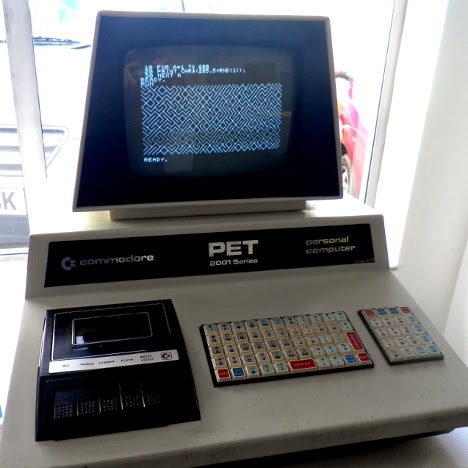
Commodore PET 2001

PRINT CHR$(205.5+RND(1)); - Commodore PET 2001

ZX Spectrum 48K

PLOT 48,56:DRAW 160,0,65536 - ZX Spectrum 48K

Intel MDS 80 Microprocessor Development System

Intel MDS 80 Microprocessor Development System

HP1000 F Series minicomputer

HP1000 F Series minicomputer
Friday, 18 October 2013

Video Gaming 1979-1989 at the NCCD

Video Gaming 1979-1989 exhibition at The National Centre for Craft and Design

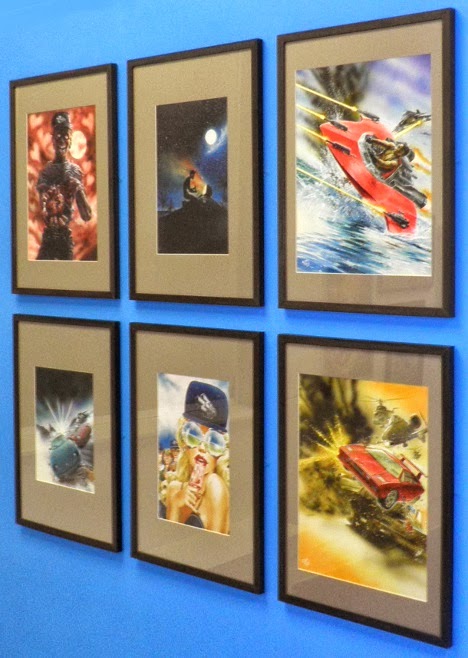
The National Centre for Craft & Design is hosting an event to celebrate the golden age of video games, "Revolution in the Bedroom, War in the Playground: Video Gaming 1979-1989". The exhibition runs from 19th October to 5th January in the main gallery.

The exhibition focuses on bedroom programmers, 8-bit games design and magazine cover art with classic games running on several computers. If you're in the Sleaford area, it's definitely worth a visit.

ZX Spectrum circuit schematic diagram by Simon Patterson

Detail from Simon Patterson's 15 metre chalkboard circuit diagram

artwork by Oliver Frey

Cover artwork by Oliver Frey

Video Gaming 1979-1989 exhibition

Thursday, 1 August 2013

ZX Spectrum Koch (Lévy C) Curve

ZX Spectrum Koch (Lévy C) Curve

A few years ago I submitted a couple of type-in programs (C-Curve and Curtains) to Your Sinclair and they featured in the penultimate issue (August 1993).

Encouraged by a shiny new YS badge I sent off a new batch of programs. Unfortunately it was too late. The September issue would be Your Sinclair's "Big Final Issue".

C-Curve is one of the simplest fractal curves. It starts with a straight line. To find the next iteration, each line is replaced by two lines at 90°:

C Curve fractal

Here's a later 69 byte version of the program which plots the fractal in approximately 1.52 seconds! Assemble with Pasmo (pasmo ccurve.asm ccurve.bin), load the binary to address 65467 in your favourite emulator and run using RANDOMIZE USR 65467 :-)

  org 65467
  ld de,49023 ; d = position on x axis
              ; e = position on y axis
  ld bc,3840  ; b = number of iterations
              ; c = initial direction
RECURSE:
  djnz DOWN

  ld a,6      ; check direction
  and c       ; c=0, left
  rrca        ; c=2, up
  rrca        ; c=4, right
  add a,a     ; c=6, down
  dec a
  jr nc,XMOVE

  add a,e     ; adjust y position +/-1

  ld e,a      ; calculate high byte of screen pos
  rrca
  scf
  rra
  rrca
  xor e
  and 88
  xor e
  and 95
  ld h,a
  sub h

XMOVE:
  add a,d     ; adjust x position +/-1

  ld d,a      ; calculate low byte of screen pos
  rlca
  rlca
  rlca
  xor e
  and 199
  xor e
  rlca
  rlca
  ld l,a

  ld a,7      ; calculate bit position of pixel
  and d
  ld b,a
  inc b
  ld a,1
SHIFTBIT:
  rrca
  djnz SHIFTBIT

  xor (hl)    ; plot
  ld (hl),a
  ret

DOWN:
  inc c       ; turn 45° clockwise
  call RECURSE
  inc b
  dec c       ; turn 90° anti-clockwise
  dec c
  call RECURSE
  inc b
  inc c       ; turn 45° clockwise
  ret

Finally here's a short type-in program to poke the code into a real Spectrum!

Thursday, 4 July 2013

Silicon Dreams & The Vintage Computer Festival

The Centre For Computing History at Silicon Dreams

This weekend the biggest event in the U.K.'s retro computing calendar will be hosted at the Snibston Discovery Museum in Leicestershire. The Vintage Computer Festival follows 2010's highly successful event with most of the main exhibitors returning. Some of the highlights include:

  • Raspberry Jam - a hands-on workshop for the Raspberry Pi single board computer organised by the Centre for Computing History.
  • The Amiga is well represented at the show with demonstrations of MorphOS 3.2 and the latest AmigaOne X1000.
  • 15+ exhibitors will be displaying a wide range of historic / unusual computers including RISC OS running on the Raspberry Pi.
  • Look out for the Spectranet ethernet board in action. Tweet direct from a ZX Spectrum complete with nixie tube tweetometer!

The event runs from 5th - 7th July. Tickets are £15 for the day, or £20 for the weekend. We'll be there when the gates open at 10am. Is anyone else planning to attend?

Tuesday, 18 September 2012

Programming Editors for Android on the Nexus 7

A few days ago I received a Nexus 7 for programming on the go. The Nexus features a 1.3 GHz quad-core CPU, 1 GB RAM and runs Android 4.1 (Jelly Bean).

The Nexus is supplied without a text editor so I started searching for the perfect programming editor. After experimenting with dozens, here are the top candidates:


The 920 Text Editor supports multiple open files and syntax highlighting for 35 languages.

(click thumbnail for the full screenshot)

DroidEdit is ad-supported and features syntax highlighting for 26 languages and multiple open files. Upgrading to DroidEdit Pro adds support for FTP and Dropbox.

Jota is a freeware editor with syntax highlighting for 20+ languages, regular expression search and the ability to share directly to Twitter, Facebook, etc.

Jota+ allows two open files and has syntax highlighting for 20+ file formats. Jota+ Pro adds support for multiple open files, Dropbox, Box and SkyDrive.

Touchqode supports highlighting for 8 languages, has built in FTP access and a custom keyboard. Upgrading to Touchqode Pro adds several features including a GitHub viewer.

Unfortunately none of the above supports code folding which would be really handy on the 7″ screen. In the end I've settled for Jota+ with CodeWhisk, a replacement keyboard with faster access to numbers and symbols. Which editor / keyboard combo are you using on Android? :-)